'Today, there is pervasive fear in society; an uncertainty of what might happen.' 'This has forced Muslims to shrink further into mental ghettos, with many considering extreme measures like pretending to change their identity.'

Thackeray said he has to undergo a surgery on June 1 and after recovering from it, he would again address a public meeting.

In this lockdown, no matter how many similarities the memory dredges up from past events and associations, there is one thing that has no precedent: The isolation that it has imposed on people, reports Arundhuti Dasgupta.
One accused was acquitted by the court.

Controlled communal tension is useful in ensuring continued Muslim support. Fear of the BJP is a requirement for both, the Congress and the Samajwadi Party, to keep their Muslim vote bank in line, says Saeed Naqvi.

Increasingly seen as the 'bellwether' for the 2019 Lok Sabha elections, the assembly election results will not only decide as to who will rule UP but show which way the wind is blowing ahead of the Lok Sabha elections two years hence.

Javadekar, along with Piyush Goyal and Dharmendra Pradhan, is among the few ministers who have party as well as ministerial responsibilities.
'Non-separation of religion from politics is India's most daunting challenge'

Looking back at the history of the Memon family from March 12, 1993 to July 30, 2014
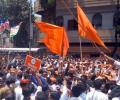
For it's not the Sena alone that indulges in hooliganism. 'Thokshahi', as the Sena proudly calls it, is the hallmark of the party and of its offshoots. But other parties haven't exactly been models of good behaviour. Not just Maharashtra, ministers and MLAs slapping officials everywhere in the country is not unheard of, says Jyoti Punwani.

'The burden of proof is on Muslim parties to show that this finding, that the mosque was built on land held sacred by Hindus, is wrong'
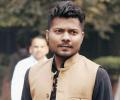
One would not think that a Facebook status or a tweet could land you in jail, at least not in India -- the world's largest democracy. However, the reality is a lot more brutal in India, which has a shameful history of locking up its citizens for dissenting viewpoints. According to Mint, at least 50 people have been arrested through 2017 and 2018 for posts on social media. Syed Firdaus Ashraf/Rediff.com presents some of the most prominent cases.

Assembly elections in Himachal Pradesh and Gujarat are over. Another set of state elections is due in 2018. Here's an assessment of the next round of the electoral challenge and how it could change India's political equations.

The following are the members of the Memon family who faced trial.

A new report says Indian jihadis, including the Indian Mujahideen, are significantly more lethal as a result of external support, primarily from Pakistan. Aziz Haniffa reports.

We celebrate January 26 as Republic Day because that's the day on which we adopted the Constitution in 1950. Yet, in the days preceding and following Republic Day 2021, three different courts violated the Constitutional rights of citizens, observes Jyoti Punwani.
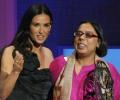
When Subir Roy met Ruchira Gupta at The Telegraph 35 years ago she was not quite 20 and not a graduate. Today she is the indomitable founder of Apne Aap, which has touched the lives of over 21,000 women who were victims of sex trafficking.

'The wheel does not need to be reinvented.' 'The question is whether we are prepared to put our shoulder to it to make it turn.'

The Sangh's leadership has boxed itself into a tight situation. It now needs to wait and see if Modi can deliver in the Lok Sabha polls, says Nilanjan Mukhopadhyay.
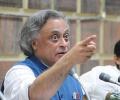
During the Congress regime, India did witnessa slew of reforms which are now taken up by the Modi government too.
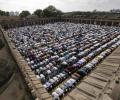
'One can understand this prejudice in the minds of policemen against Muslims, without accepting it. But what tilts the balance disproportionately is the police's blind eye to offences committed in the name of the majority.' says Jyoti Punwani.
The logic behind the BJP targeting Mayawati's votes.
She has been losing her party's core voters since the 2007 assembly polls, whereas the Samajwadi Party has managed to keep its flock together. The BJP believes she is a soft target.
To be sure, Modi is no Vajpayee; at least that is the impression he gives. However, this doesn't mean that he will be looking for a fight. All it means is that if Pakistan seeks a fight, he will not back down. What it also means is that the pusillanimous approach of the previous governments to ceaseless provocations from Pakistan will probably change, says Sushant Sareen.

'Teaching lessons is the objective behind every school.' 'For the moment, a state seems intent to teach a lesson -- that students of Classes 4, 5 and 6 can wage war against the mighty Indian nation,' says Krishna Prasad.

'Modi has shown political courage by instituting several economic reforms which include demonetisation, ushering in GST, eradication of benami transactions...'
Anil Swarup, who conceived the Rashtriya Swasthya Bima Yojana -- a scheme the United Nations Development Programme and the International Labour Organisation recognised as among the finest -- speaks to Anjuli Bhargava.
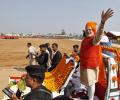
Namo, Namo as India's prime minister? Not yet, says Pakistan-based journalist Amir Mateen.
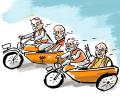
'Like in cricket, M S Dhoni was the captain and Virat Kohli played under him.' 'Then Dhoni played under Kohli.' 'Now imagine, having a second switch.' 'That is the analogy here, and I find no other example in Indian politics, or even world politics.'

'We are passing through a very historical moment. The UP election next year and the Lok Sabha election of 2019 will decide the course of India.' 'Maybe the unlettered will save India again because they have inherited a different India and a different idea of India,' says eminent social scientist Achyut Yagnik.

This piece is a tribute to that corner of film criticism that they call subtextual film criticism.
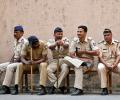
'When you read that for the first time, areas in Gujarat dominated by Patidars/Patels have been declared 'sensitive' for the civic polls that were held this week, you sit up and take note,' says Jyoti Punwani.
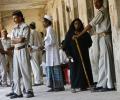
Muslims need to get out of their Isolation Syndrome, argues Mohammad Sajjad.

'No one talks about the Mumbai riots anymore, though like Delhi 1984, the guilty have not been punished. In Gujarat, many powerful leaders of the state's ruling party are in jail for their role in the riots... In Mumbai, only one politician of the Shiv Sena, a former MP, was convicted of hate speech, along with two other Shiv Sainiks, one of whom was a corporator and the other a junior functionary... So why the apathy? Could it be because despite these statistics and the widely-publicised findings of the Srikrishna Commission, what remained in public consciousness was the violence by the Muslims, thanks to a highly efficient Sena propaganda machine? There's no demand for it, but would an SIT probe into the closed cases of the Mumbai riots help today?' The fadeout of Mumbai's riots from public debate can be called a triumph of the communal State, argues Jyoti Punwani.

Atal Bihari Vajpayee would seek to placate the hawks in the RSS by stating that the writing of history should not be one-sided. At the same time, he would project a moderate 'Nehruvian' image of himself as the archetypal liberal politician who would strive to attain a balance between conflicting viewpoints. A fascinating profile of the former prime minister and Bharat Ratna by Paranjoy Guha Thakurta and Shankar Raghuraman.

'From the time Rahul Gandhi entered the scene, I started feeling dissatisfied. No true Congressman will be able to agree with the way Rahul Gandhi functioned. He has not attained enough maturity or wisdom.' 'You cannot compare Rahul Gandhi with Narendra Modi. When you take into consideration Modi's political experience and abilities, nobody can think of projecting Rahul Gandhi against him.' 'The main culprits behind such a humiliating defeat are Veerappa Moily and P Chidambaram. It was Moily who did the maximum damage to people and the party.' T H Mustafa, one of the first Congress leaders to criticise Rahul Gandhi, speaks out in this interview to Shobha Warrier/Rediff.com

'I had once gone to Kashmir with him and his wife. He would talk to the boatmen, the watchmen, at the dargahs he would ask so many questions. He always had a notebook and would write down everything... He was an intellectual and he was fun. He loved people, loved life and had the spirit of enquiry. He used to advise me, "When you write - inform, provoke, abuse".' Sadia Dehlvi on her 30-year-old friendship with Khushwant Singh.

'When the youth population is so large, in a globalised world, they look for opportunities. Are there enough opportunities for the youth in India?' 'The idea of affirmative action has to be creating capability. All individuals have potential. Unfortunately, there is capability deprivation because of the State's inaction.' 'Nation building has been a disaster in India mainly because we lacked the work ethic compared to the US and European countries.'

Dhananjay Desai has been allowed to spread his poison to young men in Maharashtra and Goa over the last five years, by a 'secular' Congress-NCP government. The 23 cases pending against him have not stopped him. He and his supporters must have thought they were immune when they lynched a bearded Muslim at night. Neither Desai nor his followers, nor the police, nor their 'secular' political masters, must have expected the nationwide furore that followed, says Jyoti Punwani.

'There are too many things that haven't gone out of you. So even though the years may have gone by, you are still close to the films in terms of the making.'
